
Are Lunch Bowls Good For Low Carb Diets?
Table of Contents
1. The Benefits of Lunch Bowls for Low Carb Diets
2. What Makes a Low-Carb Meal Balanced and Filling?
3. What Ingredients Make a Salad Bowl Perfectly Low Carb?
4. How Inspired Go Helps You Stay on Track With Low Carb Goals
1. The Benefits of Lunch Bowls for Low Carb Diets
Living a low carb lifestyle often requires careful meal planning and preparation. This is where lunch bowls can be a game-changer. These nutrient-dense meals are perfect for those adhering to a low carb diet, offering a variety of fresh, wholesome ingredients that provide essential nutrients without the excess carbs. With options like the Everything Bagel Salad or the Roasted Fall Bowl, you can enjoy unique flavors while keeping your carb intake in check. Moreover, these ready-to-eat meals save you time in the kitchen and make sticking to your diet more convenient. They're also portion-controlled, reducing food waste and promoting a more sustainable way of eating. Lastly, with transparent nutritional information readily available, you can easily track your carb intake and make informed dietary choices.
Order fresh salads today →
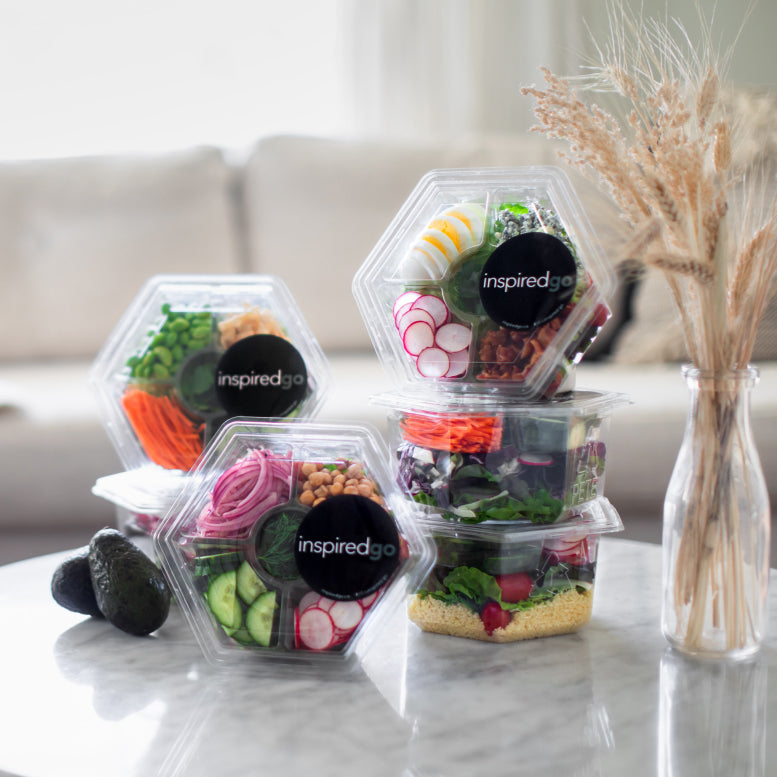

2. What Makes a Low-Carb Meal Balanced and Filling?
Not all low carb meals are created equal, some sacrifice fullness and nutrition in favor of carb-cutting alone. A truly balanced low carb meal includes fiber-rich greens, healthy fats, and clean proteins that keep you feeling satisfied without loading your system with excess starches or sugars. Meals built this way support better digestion, steady energy, and satiety, making them practical for workdays, workouts, or weight management. Without enough volume or variety, however, low carb meals can leave you underfed or unsatisfied, leading to rebound cravings later in the day. Knowing how to combine nutrient-dense ingredients like avocado, seeds, roasted vegetables, and leafy greens can transform low carb eating into something sustainable and enjoyable. When properly balanced, these meals fuel your body with what it needs, no spikes, crashes, or feelings of restriction.
Choose your salads and schedule delivery →
3. What Ingredients Make a Salad Bowl Perfectly Low Carb?
A low carb salad bowl isn’t about restriction, it’s about smart ingredient choices that deliver nutrition, color, and texture. Base your meal on leafy greens like kale, romaine, or arugula, then layer in low-carb vegetables such as bell peppers, broccoli, or cucumbers. Seeds, nuts, and plant-based proteins add essential fats and protein, rounding out the meal with long-lasting energy. Dressings made with olive oil, citrus, or tahini enhance flavor naturally, avoiding hidden sugars that can derail your goals. The result is a meal that’s bright, balanced, and satisfying without being heavy or processed. With the right mix, a low carb salad bowl becomes a fresh, crave-worthy meal you can enjoy daily, proof that nutritious eating can also be full of flavor and variety.
Get fresh salads and snacks delivered →
4. How Inspired Go Helps You Stay on Track With Low Carb Goals
Inspired Go takes the effort out of maintaining a low carb lifestyle by preparing fresh, ready-to-eat meals that balance nutrition and satisfaction. Our salads and bowls are built with fiber, protein, and flavor at the forefront, making it easy to eat well without stress or guesswork. Each recipe is portioned for balance, featuring crisp greens, roasted vegetables, seeds, and clean dressings that keep carbs low while taste stays high. We designed our meals to align with your wellness goals, whether that’s energy, focus, or better digestion, while fitting perfectly into your daily routine. By delivering meals that are both nutrient-dense and exciting, we make low carb eating sustainable for the long run. With Inspired Go, healthy choices don’t just fit your life, they elevate it.
Try our fresh, ready-to-eat salads →
Frequently Asked Questions
The keto diet can be healthy for some individuals, but its effectiveness and safety depend on personal health goals and conditions. It emphasizes low-carb, high-fat foods to encourage the body to burn fat for energy. While it may promote weight loss and improve blood sugar control, it can also lead to nutrient deficiencies if not balanced properly. Consulting a healthcare professional before starting the keto diet is highly recommended.
Starting a healthy diet involves gradually introducing nutrient-rich foods while reducing processed and sugary options. Focus on whole foods like fruits, vegetables, lean proteins, whole grains, and healthy fats. Meal planning can simplify your efforts and help create balanced portions. Additionally, stay hydrated and avoid extreme restrictions. Beginning with small, sustainable changes allows you to build habits that support long-term health.
A low-carb diet can be healthy when balanced with nutrient-dense foods. Reducing carbohydrates and focusing on proteins, healthy fats, and vegetables can improve blood sugar control and promote weight loss. However, cutting carbs too drastically can lead to fatigue, nutrient deficiencies, or digestive issues. For a sustainable low-carb diet, incorporate a variety of nutrient-rich foods and avoid overly restrictive practices.
A healthy diet is balanced and includes a variety of nutrient-dense foods from all major food groups. It prioritizes fruits, vegetables, whole grains, lean proteins, and healthy fats, while limiting processed foods, added sugars, and excessive sodium. Portion control and proper hydration are key components. A healthy diet not only supports physical health but also boosts energy levels, mental clarity, and overall well-being.
The Mediterranean diet is often regarded as one of the healthiest. It focuses on plant-based foods, such as fruits, vegetables, whole grains, nuts, and seeds, alongside healthy fats like olive oil. Moderate amounts of fish, poultry, and dairy are included, while red meat is limited. Known for reducing the risk of heart disease and improving longevity, it offers a well-rounded approach to healthy eating.


