
What Are Best Carbs To Avoid In Salads?
Table of Contents
1. Understanding Carbs to Avoid in Salads
2. Why Are Low Carb Lunches a Smart Choice for Busy Days?
3. How Can You Build a Low Carb Meal That Still Feels Filling?
4. How Inspired Go Helps You Stay on Track With Low Carb Goals
1. Understanding Carbs to Avoid in Salads
When it comes to maintaining a balanced diet, knowing which carbohydrates to avoid in salads can be beneficial. While salads are generally seen as a healthy meal option, not all salad ingredients promote optimal health. Certain carbohydrates, particularly those found in processed foods and dressings, can add unnecessary calories and sugars to an otherwise healthy dish. For instance, croutons and bread-based toppings, often made from refined grains, can contribute to a high glycemic load. Similarly, sugary dressings and sauces can significantly increase the carb content of your salad. Opting for salads with fresh vegetables, lean protein, and healthy fats can ensure you're getting a nutrient-dense meal without the unwanted carbs.
Order fresh salads today →

2. Why Are Low Carb Lunches a Smart Choice for Busy Days?
Midday meals often set the tone for energy, focus, and mood for the rest of the day. Unfortunately, carb-heavy lunches can lead to sluggishness or an afternoon crash, especially for those who spend long hours at work or on the go. Low carb lunches built around vegetables, seeds, and nutrient-dense fats provide clean fuel that’s easier to digest and won’t weigh you down. This makes them perfect for professionals, parents, or anyone who needs lasting focus without feeling overfull. Unlike quick snacks or sugary convenience foods, low carb meals release energy slowly, promoting stable blood sugar and mental clarity. They’re ideal for maintaining productivity and avoiding the “post-lunch fatigue” that can derail your afternoon.
Choose your salads and schedule delivery →
3. How Can You Build a Low Carb Meal That Still Feels Filling?
The secret to a successful low carb meal isn’t just cutting carbs, it’s creating a sense of fullness and satisfaction through balanced nutrients and texture. A fiber-rich base of greens paired with proteins like tofu, eggs, or seeds keeps you satiated without relying on starch. Healthy fats such as avocado or olive oil add depth and flavor while helping your body absorb fat-soluble vitamins. Adding roasted vegetables and crunch from nuts or seeds gives each bite substance, turning a simple salad into a complete meal. These ingredients don’t just keep hunger at bay, they also fuel stable energy and support digestion throughout the day. A well-constructed low carb bowl should feel satisfying, flavorful, and energizing, proof that eating lighter can still feel deeply nourishing.
Get fresh salads and snacks delivered →
4. How Inspired Go Helps You Stay on Track With Low Carb Goals
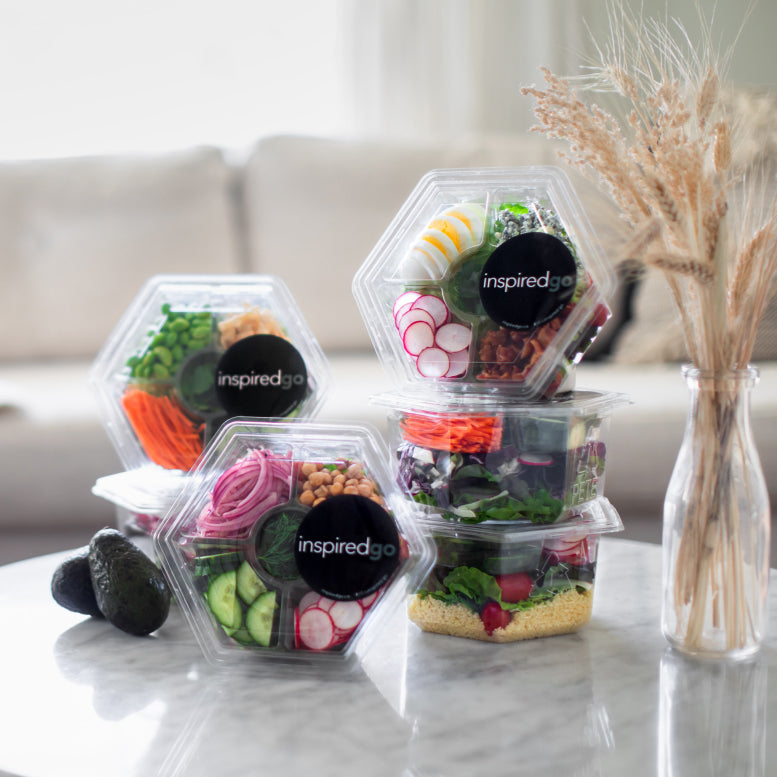
Inspired Go takes the effort out of maintaining a low carb lifestyle by preparing fresh, ready-to-eat meals that balance nutrition and satisfaction. Our salads and bowls are built with fiber, protein, and flavor at the forefront, making it easy to eat well without stress or guesswork. Each recipe is portioned for balance, featuring crisp greens, roasted vegetables, seeds, and clean dressings that keep carbs low while taste stays high. We designed our meals to align with your wellness goals, whether that’s energy, focus, or better digestion, while fitting perfectly into your daily routine. By delivering meals that are both nutrient-dense and exciting, we make low carb eating sustainable for the long run. With Inspired Go, healthy choices don’t just fit your life, they elevate it.
Try our fresh, ready-to-eat salads →
Frequently Asked Questions
Les légumes à salade les plus nutritifs sont les variétés à feuilles foncées comme les épinards, le chou frisé et la roquette. Ces légumes sont remplis de vitamines essentielles, notamment A, C et K, ainsi que de minéraux comme le calcium et le fer. Le chou frisé est particulièrement riche en antioxydants, tandis que les épinards offrent des quantités importantes de folate et de magnésium. Choisir un mélange de légumes verts foncés améliore à la fois la saveur et la valeur nutritive de votre salade.
Une salade saine comprend un équilibre d'ingrédients riches en nutriments tels que des légumes-feuilles, des légumes frais, des protéines maigres et des graisses saines. Par exemple, une base d'épinards et de chou frisé, associée à du poulet grillé, des tomates cerises, de l'avocat et une vinaigrette légère à l'huile d'olive, crée un repas sain. Évitez les garnitures frites ou les vinaigrettes sucrées, car elles ajoutent des calories vides, et optez pour des ingrédients naturels pour maximiser la nutrition.
Oui, manger de la salade quotidiennement est une saine habitude si elle comprend une variété d'ingrédients frais et riches en nutriments. Les salades apportent des fibres pour la digestion, des antioxydants pour l'immunité et des nutriments essentiels comme le potassium et le folate. Manger régulièrement des salades peut soutenir la gestion du poids et améliorer les niveaux d'énergie. Pour éviter la monotonie, variez vos légumes verts, vos protéines et vos garnitures pour que les repas restent satisfaisants et nutritionnellement équilibrés.
Les vinaigrettes saines sont généralement faites à partir d'ingrédients simples et naturels. Les vinaigrettes à base d'huile d'olive, associées à du vinaigre balsamique ou à du jus de citron frais, apportent de bonnes graisses et rehaussent la saveur sans calories superflues. Évitez les vinaigrettes achetées en magasin, riches en sucre ou en conservateurs. Pour une alternative crémeuse, optez pour des vinaigrettes maison à base de yogourt grec ou d'avocat pour des avantages nutritionnels supplémentaires.
Oui, les salades sont incroyablement bénéfiques pour la santé globale lorsqu'elles sont préparées avec des ingrédients frais et entiers. Elles sont faibles en calories et riches en vitamines, minéraux et antioxydants, favorisant la santé cardiaque, la digestion et l'immunité. L'ajout d'un mélange de protéines et de graisses saines crée un repas satisfaisant et riche en nutriments. L'intégration régulière de salades dans votre alimentation peut favoriser le bien-être à long terme et l'énergie.